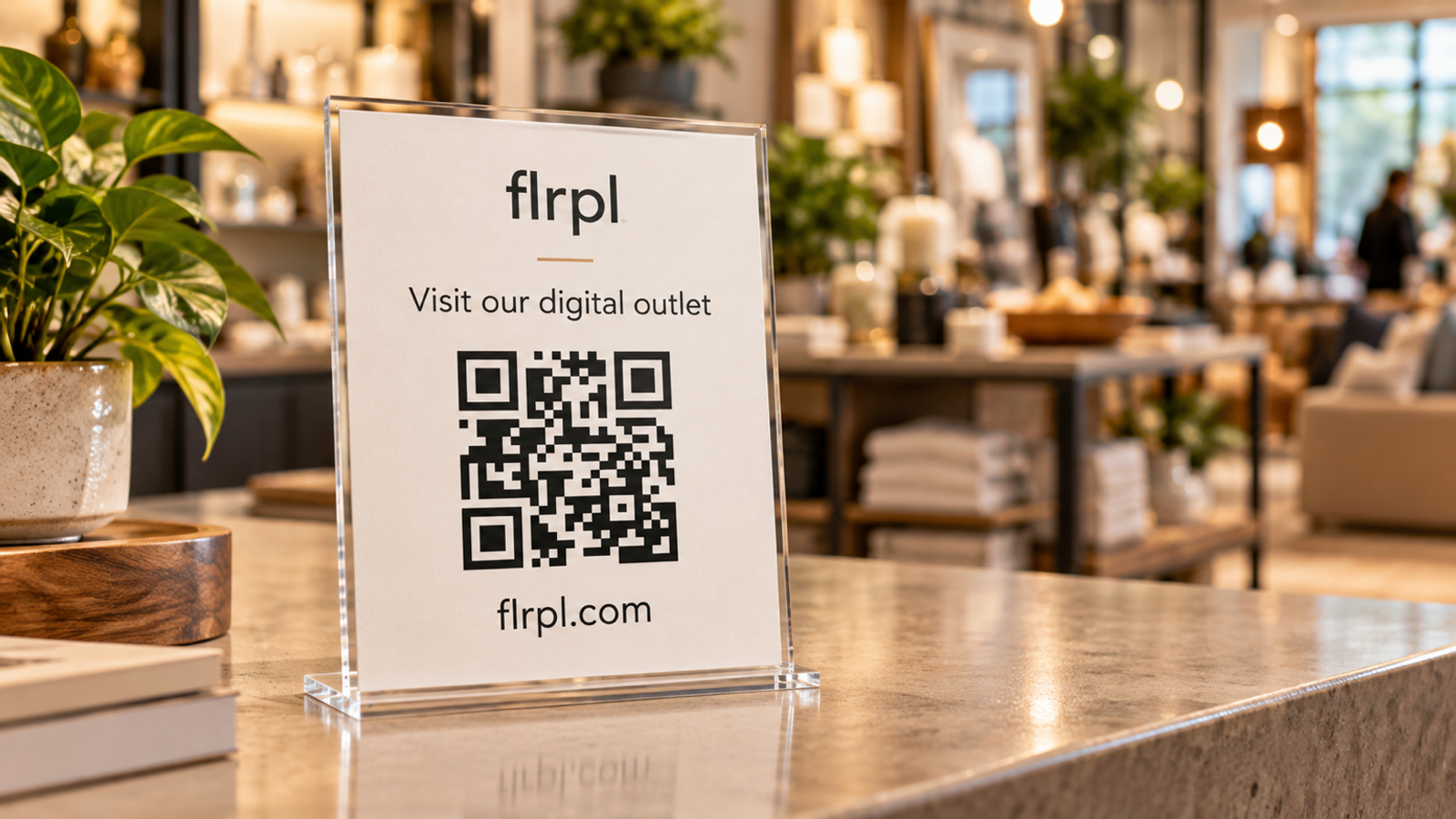
Your Store. Your Merchandise. Your Digital Outlet.
Give your store a digital outlet. See how FLRPL helps local retailers showcase products, share their branded storefront, and connect with nearby shoppers.

FLRPL Editorial Team
Author
TL;DR
- Every retailer has already built something: a store, a merchandise selection, an identity, a customer base. FLRPL gives that retailer another place to put it to work.
- Each retailer gets its own branded storefront on FLRPL — not an anonymous listing, but a destination that represents the business behind the merchandise.
- The retailer decides what goes in it. A Drop can be a floor sample that needs to move or a new arrival the retailer is proud to show off.
- The outlet works in both directions: retailers can promote it to the customers they already have, and shoppers who've never heard of the store can discover it through a single product.
- Getting merchandise in front of people shouldn't be complicated. Snap it. List it. FLRPL it.
Every independent retailer has already done the hard part.
They found the location. They built the relationships. They learned what their customers want, season after season, and made the thousand small decisions that turn a building full of merchandise into a store people trust. That work doesn't need to be redone. It needs another place to be seen.
That's what a digital outlet on FLRPL is. Not a replacement for the store. Not a new business to run. A dedicated, branded space where a retailer can put selected merchandise in front of nearby shoppers — merchandise the retailer already has, priced the way the retailer wants, under the retailer's own name.
Your store. Your merchandise. Your digital outlet.
A Storefront That's Actually Yours
When a retailer joins FLRPL, they don't get a single product listing floating in a sea of unrelated merchandise. They get their own storefront — a page that represents the business itself, not just whatever item happens to be featured that week.
A shopper might land there because a specific product caught their eye: a dining table, a floor lamp, an open-box range. But once they're there, they're not looking at an isolated listing. They're looking at a business. They can see what else that retailer has chosen to feature, learn a little about the store, find its location, get directions, and understand that there's a real place behind the product — with a name, an address, and people who work there.
The product might be what starts the conversation. The retailer and its brand are the destination it leads to.
Merchandise, on the Retailer's Terms
What goes into a digital outlet is entirely up to the merchant. That's not a minor detail — it's the whole premise.
A retailer might feature a floor sample that's coming down to make room for a new collection. An open-box return that's priced to move quickly. Overstock from a shipment that came in bigger than expected. A discontinued line, a one-of-a-kind find, a seasonal item that deserves a push before the weather turns. Or none of that — a brand-new arrival the retailer can't wait to show off, a special purchase, simply something they believe nearby shoppers would want to know about.
For some retailers, that digital outlet might serve as an extension of the traditional back room or clearance corner. For others, it might be a place to introduce something new or spotlight merchandise they're especially proud of. It can be both.
Sometimes a retailer needs something gone. Other times, they just want people to know something is available. Both are legitimate reasons to feature a product, and FLRPL doesn't distinguish between them. The retailer chooses the merchandise, sets the price, and stays in control of the relationship with anyone who shows interest.
It Works Alongside What You're Already Doing
Most independent retailers aren't starting from zero on marketing. They're running social accounts, sending emails, maintaining a website, maybe still putting up the occasional print flyer or running a local ad. FLRPL isn't here to replace any of that, and it would be a mistake to pretend otherwise.
Social media is where a retailer builds relationships with people who already follow them and reaches new audiences through shares and discovery features. A website explains who the business is and what it offers, on the retailer's own terms. Those channels do real work, and nothing about FLRPL changes that.
What a digital outlet adds is something more specific: a dedicated, product-centered space built around actual merchandise, sitting in an actual store, right now. It's a tool that fits alongside the marketing a retailer already does — not a competitor to it.
Something You Can Point People Toward
Your digital outlet isn't just a place where merchandise waits to be discovered. It's a destination you can actively promote.
Picture a retailer running a seasonal promotion, resetting a showroom floor, or simply wanting to spotlight a handful of new arrivals. Instead of describing that merchandise in general terms, they can point people directly to a storefront full of the actual products — through a link shared on social media, a QR code printed on a flyer or placed near a register, a line in an email campaign, or a mention in a local ad.
A QR code, in particular, is a simple bridge between the physical and digital sides of the same business: someone standing in the parking lot, or holding a postcard that arrived in the mail, scans it and lands directly on a curated selection of what the retailer wants them to see. It turns "come check out what we have" into something a shopper can act on immediately, without having to search for it.
The outlet becomes one more place a retailer's existing marketing can send people — and one that shows actual merchandise instead of just a description of the store.
And Something People Can Find Without Knowing You at All
Here's the other direction, and it matters just as much.
A shopper doesn't have to know a retailer's name, follow its social accounts, or have ever visited its website to become interested in something sitting inside its store. They might simply be looking for a dining table, a grill, a light fixture, or a rug — searching and browsing by product or category, in their local area, the way people already search for things they want.
Someone doesn't have to know your store to become interested in something inside it.
That's a genuinely different path to discovery than the one most marketing is built around. A retailer's existing audience already knows where to look. FLRPL is designed to create an opportunity for people who don't — shoppers who might never have thought to look for a particular store by name, but who could discover one specific product and, through it, the business behind it.
The relationship runs both ways: a retailer brings its own audience to its outlet, and FLRPL creates another opportunity for people outside that audience to discover what's there.
From a Product to an Actual Conversation
Discovery is only useful if it can lead somewhere. When a shopper finds a Drop that interests them, they can look at the photos and details, see the retailer's storefront behind it, and learn where the merchandise actually is. If they want to know more, they can message the retailer directly — ask a question, check on availability, talk through pickup or local delivery.
That's not a guarantee that every message turns into a sale. It's a practical next step: a way for interest in a product to become a conversation with the actual business that has it, without a shopper needing to track down a phone number or guess at store hours. FLRPL creates the introduction. What happens from there — the conversation, the visit, the sale — belongs to the retailer, the same way it always has.
Simple, on Purpose
Snap it. List it. FLRPL it.
That phrase isn't just a tagline — it describes what putting something into a digital outlet is actually supposed to feel like. A retailer takes a photo, adds the essentials — what it is, what it costs, what a shopper should know — and publishes a Drop. That's the process.
There's no inventory catalog to upload, no new e-commerce operation to stand up, no need to touch the store's existing website. A digital outlet is meant to be something a retailer can manage in the time they actually have, fitting into a business that's already running, not asking them to build a second one alongside it.
What would you put in your digital outlet?
For most retailers, the honest answer is: more than they'd initially assume. Not just the clearance corner. The new arrival they're excited about. The piece that represents what the store does best. The thing sitting on the floor that deserves a shopper's attention — whatever the reason happens to be.
Your store already exists. Your merchandise is already there. A digital outlet simply gives both another way to be found.
The Opportunity
Every day, independent retailers already have inventory waiting to be discovered.
Floor samples.
Open-box merchandise.
Clearance inventory.
Overstock.
Discontinued products.
One-of-a-kind finds.
Inventory already sitting on showroom floors.
That's why FLRPL exists.
FLRPL helps verified local retailers create visibility for inventory they already have, making it easier for nearby shoppers to discover what's available before they ever visit the store.
FLRPL.
Your Digital Outlet for Local Inventory.
Visibility creates discovery.
Related Articles
You Don't Need Everyone to See It
Local merchandise doesn't need everyone to see it. Explore why proximity, availability, timing, and relevance all matter in local retail discovery.


Not Every Drop Has to Be a Deal
A Drop doesn't require a markdown. See how retailers can use FLRPL to feature new arrivals, seasonal merchandise, distinctive products, deals and more.
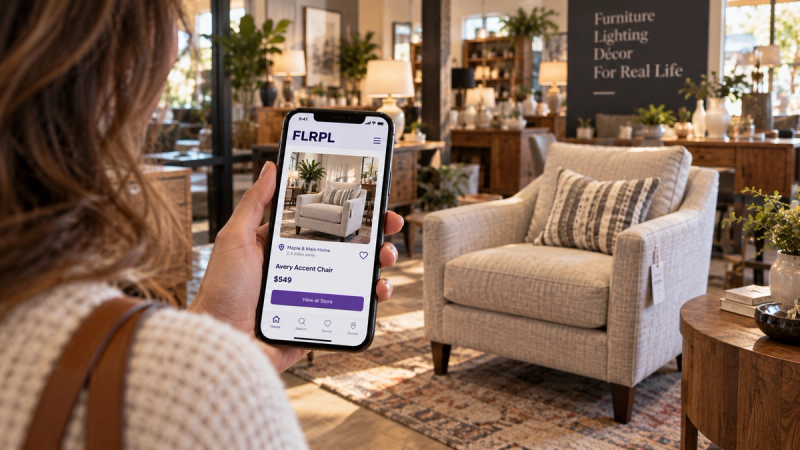
We Built FLRPL for the Merchandise Already There
Discover why we built FLRPL and how it gives local retailers another way to feature selected merchandise, reach nearby shoppers, and introduce people to their stores.
Discover What's Waiting Nearby
Browse inventory from verified local retailers near you.