Not Every Drop Has to Be a Deal
A Drop doesn't require a markdown. See how retailers can use FLRPL to feature new arrivals, seasonal merchandise, distinctive products, deals and more.

FLRPL Editorial Team
Author
TL;DR
- A product doesn't need to be marked down to deserve attention. Sometimes it simply deserves to be seen.
- Retailers already decide what gets a window display, a feature table, or a place near the entrance. FLRPL gives that same judgment another place to work.
- Newness, seasonality, distinctiveness, and value can all be reasons to create a Drop — discounting is only one of them.
- A single product can say more about a store than a generic description ever could.
- The retailer decides what's worth featuring. FLRPL simply gives that decision somewhere else to be seen.
Not Everything Worth Featuring Is on Clearance
There's a quiet assumption that can creep into how people think about featured merchandise: that a product deserves extra attention only once something needs to move. It's discontinued. It's overstock. It needs to move. Feature it, sell it, done.
That assumption isn't wrong, exactly. It's just incomplete. Plenty of merchandise deserves a closer look for reasons that have nothing to do with a markdown — because it just arrived, because it's exactly right for the season, because it's the kind of piece a retailer is proud to carry.
A Drop doesn't have to start with I need this gone. It can just as easily start with I want more people to see this.
Attention Is a Merchandising Decision
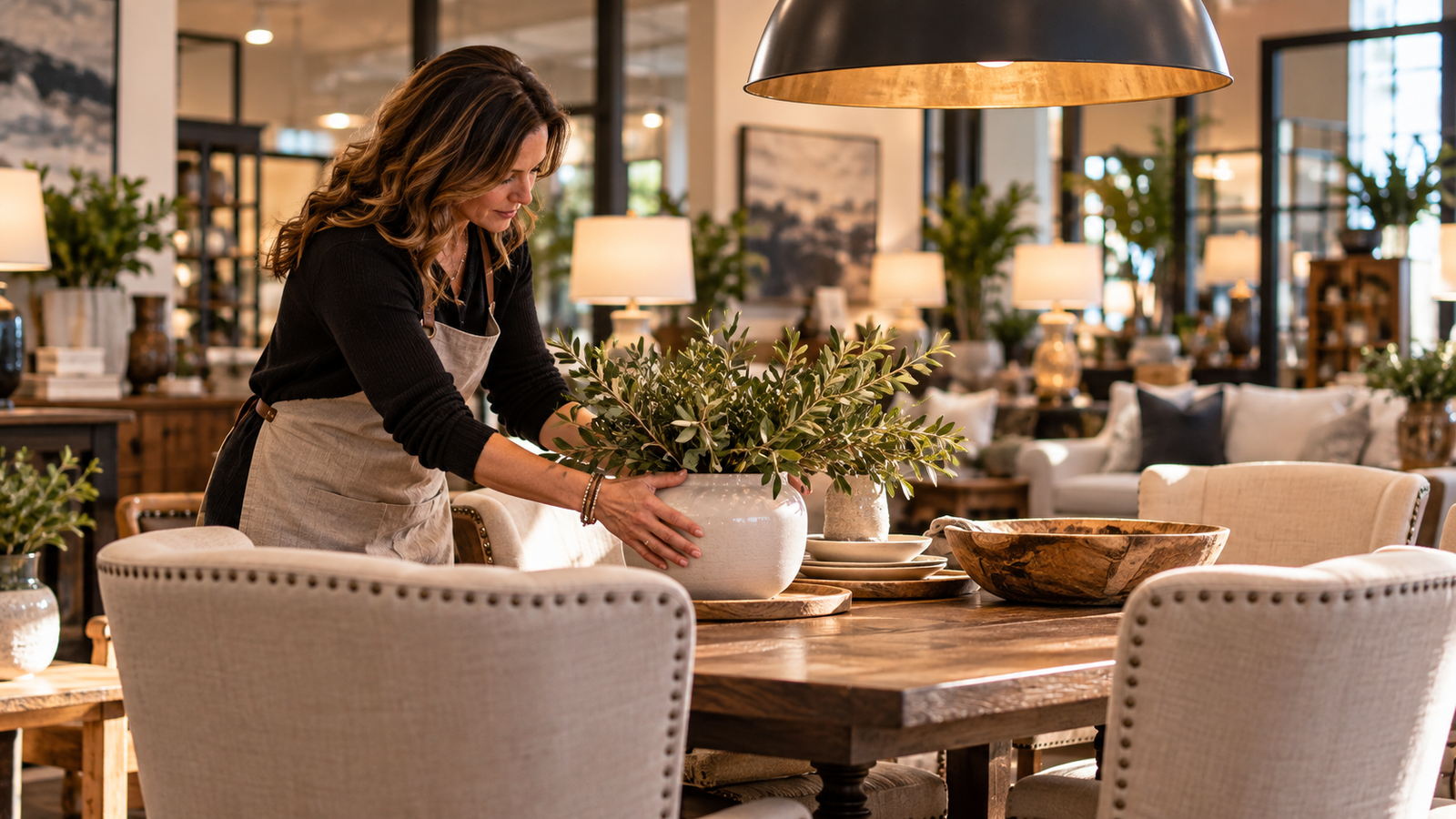
Every retailer with a physical store already makes this call, constantly, without thinking of it as a separate skill. Something goes in the window. Something gets the table near the entrance. Something gets paired into a vignette that shows how a few pieces might actually live together in a home. Something gets called out as new, or seasonal, or simply worth a second look.
None of that has to be about price. It's about attention — deciding, out of everything on the floor, what deserves the customer's eye first. Retailers do this instinctively, because it's part of running a store. FLRPL doesn't try to automate that instinct or replace it with a formula. It gives that same instinct another surface to work on, beyond the physical space of the showroom.
Sometimes You Want It Gone. Sometimes You Want It Seen.
Here's the distinction worth sitting with: the reason to feature a product is not always that something needs to go. Sometimes it is that something deserves to be seen.
A clearance dresser and a newly arrived dining table can both earn a Drop, for entirely different reasons. The dresser needs to make room. The dining table deserves an introduction. Both are legitimate. Neither is more "correct" than the other.
Widen the reasons a merchant might create a Drop, and the opportunity gets much broader. Maybe it needs to move. Maybe it just arrived. It could be exactly right for the season, distinctive enough to stand apart, available in limited quantity, or simply a product that represents what the store does particularly well. It may offer compelling value without being discounted at all.
Floor samples, open-box units, clearance, discontinued lines, and overstock remain excellent candidates for Drops — that's where the idea started, and it hasn't changed. What's changed is the ceiling.
Sometimes a Drop is about making room. Sometimes it's about making an introduction.
The Product Can Represent the Store
A single product can communicate something about a retailer faster than a paragraph of description ever could. A distinctive dining table says something about a furniture retailer's taste. A dramatic pendant light says something about a lighting showroom's point of view. A premium grill says something about an outdoor retailer's standards. A unique rug says something about a home-furnishings store's eye for sourcing.
Treat the product as a storefront.
In each case, the shopper may meet the product before they know anything else about the business behind it. Seen that way, the merchandising question changes. It's no longer only "what needs to sell." It's also "what would I want a stranger to see first, if this were the only thing they ever noticed about my store."
Value Has More Than One Definition
None of this is an argument that price doesn't matter. Deals are, and will remain, a core part of what makes FLRPL useful — a shopper looking for an open-box appliance or a marked-down floor sample is exactly the kind of shopper FLRPL is built to reach.
But value isn't only the size of a discount. A product can be worth noticing because of its quality, its design, how hard it is to find elsewhere, how well it suits a specific need, or the simple fact that it's sitting in a store nearby and available right now. A retailer's own curation — the fact that they chose to carry it in the first place — can add context and confidence to the product itself.
A deal is one reason to feature something. It was never meant to be the only one.
The Merchant Is the Editor
FLRPL isn't an algorithm deciding what deserves a Drop. The retailer is. They know the merchandise, the season, the customer walking in that week, and the reason a particular product matters right now in a way no outside system could reconstruct.
That's worth stating plainly, because it's easy to assume a discovery platform exists to sort or rank inventory on a retailer's behalf. FLRPL keeps that decision where it belongs: with the retailer. The same person who decides what goes in the window decides what deserves a Drop — and FLRPL gives that decision another place to be seen. That merchant-first thinking is part of why we built FLRPL for the merchandise already there.
A single well-chosen product can even do the job your inventory has always quietly done as marketing — telling a shopper who you are before you've said a word.
What Makes Something Worth a Drop?
It's tempting to answer that with a checklist. It resists one on purpose. The honest answer is closer to a standard than a formula: if it's merchandise you believe is worth putting in front of more nearby shoppers, it may be worth a Drop.
Sometimes that's the floor sample that needs to come down before the new collection arrives. Sometimes it's the piece you just unboxed and can't wait for someone to see. Either way, the product often gets found before the store does — which means the choice of what to feature is, in a small way, also a choice about how a shopper meets your store for the first time. What happens after that first glance is still a story that unfolds inside the showroom, the way it always has.
The Opportunity
Every day, independent retailers already have inventory waiting to be discovered.
Floor samples.
Open-box merchandise.
Clearance inventory.
Overstock.
Discontinued products.
One-of-a-kind finds.
Inventory already sitting on showroom floors.
That's why FLRPL exists.
FLRPL helps verified local retailers create visibility for inventory they already have, making it easier for nearby shoppers to discover what's available before they ever visit the store.
FLRPL.
Your Digital Outlet for Local Inventory.
Visibility creates discovery.
Related Articles
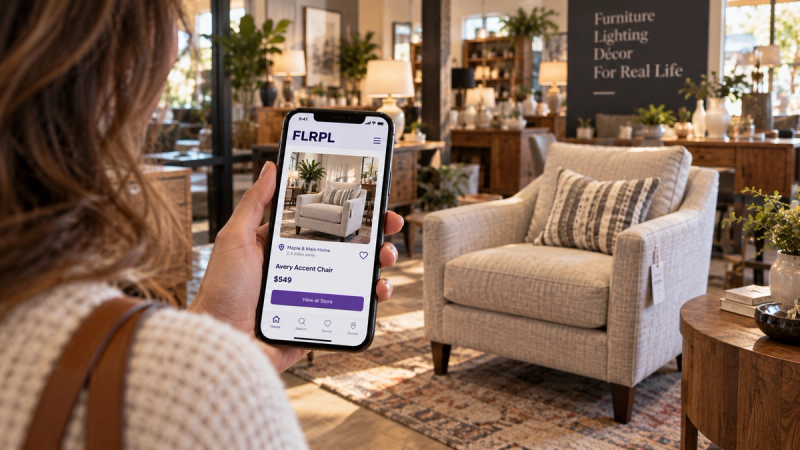
We Built FLRPL for the Merchandise Already There
Discover why we built FLRPL and how it gives local retailers another way to feature selected merchandise, reach nearby shoppers, and introduce people to their stores.

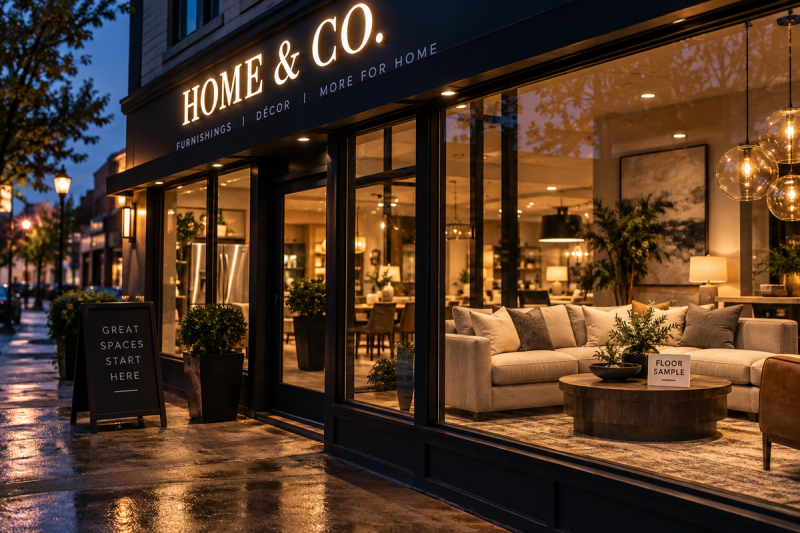
Your Storefront Starts Before the Front Door
Shoppers often research before visiting a store. See how product-level visibility can help local inventory become discoverable before they reach the front door.
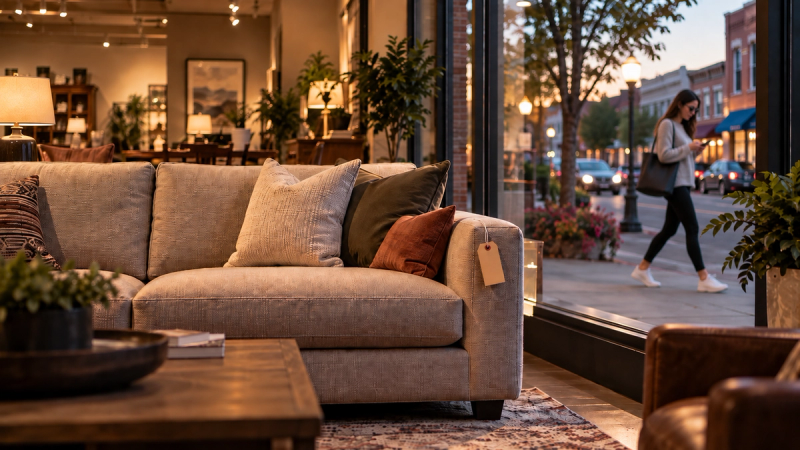
The Inventory Is Already There. The Audience Isn't.
Local retailers already have inventory on the floor. See how product-level discovery can give that merchandise another way to be discovered by nearby shoppers.
Discover What's Waiting Nearby
Browse inventory from verified local retailers near you.