The Inventory Is Already There. The Audience Isn't.
Local retailers already have inventory on the floor. See how product-level discovery can give that merchandise another way to be discovered by nearby shoppers.

FLRPL Editorial Team
Author
TL;DR
- A retailer has already done the hard part: buying, pricing, and displaying the merchandise on the floor.
- Somewhere nearby, a shopper may already be interested in exactly that kind of item — but the two may simply have no way of finding one another.
- Consumers do a great deal of research before they ever walk into a store, and research shows that in-stock reliability matters when shoppers choose a retailer.
- Physical stores remain a leading place where people discover products — but only for the people who already walked in.
- Floor samples, open-box pieces, clearance goods, and one-of-a-kind finds are especially well suited to being encountered on their own terms, rather than folded into a generic catalog.
- FLRPL is designed to give selected physical inventory another path to become discoverable, creating another possible connection between local merchandise and nearby shoppers.
The Sofa on the Floor
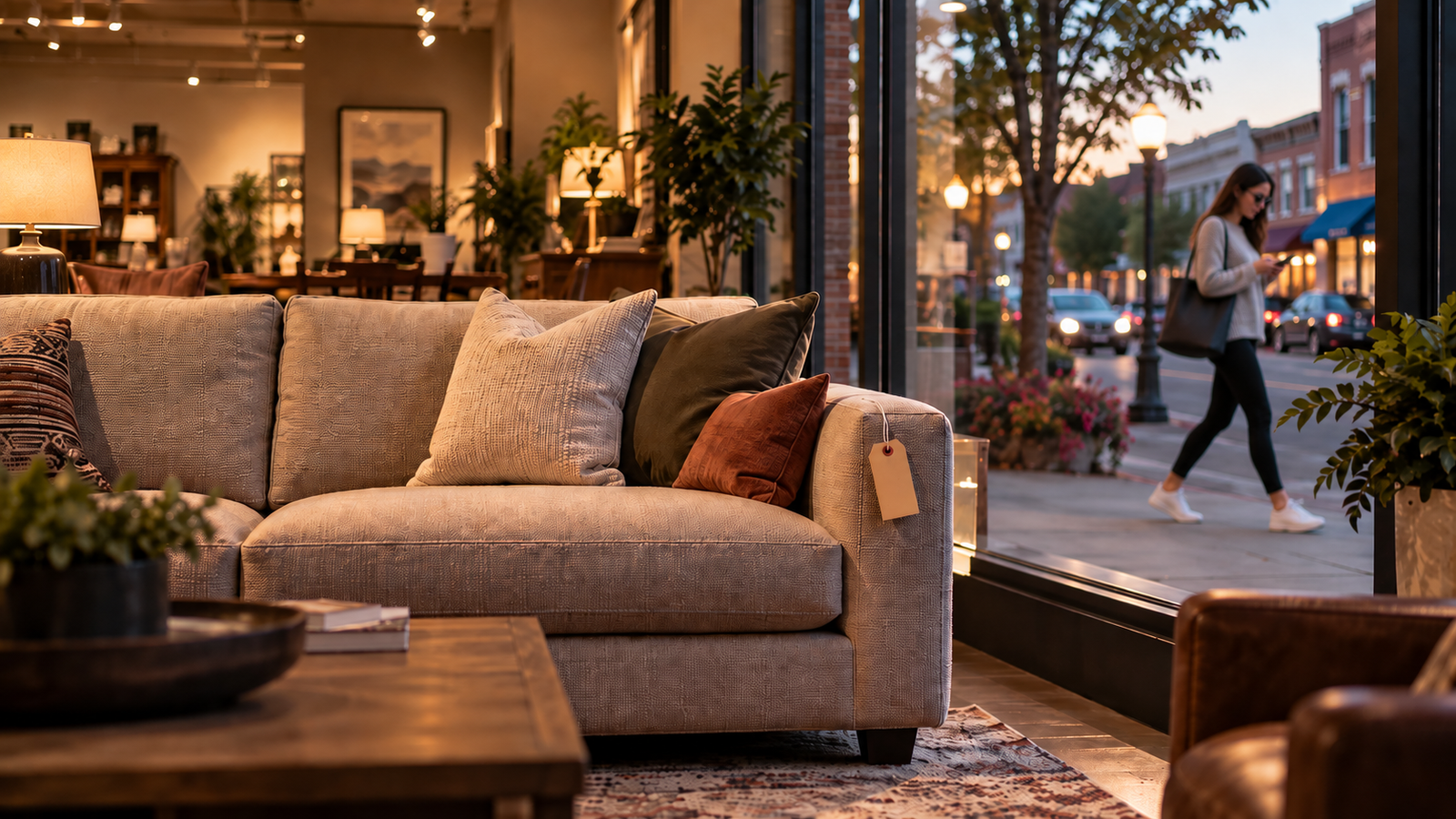
There's a sofa on a showroom floor right now. It's been marked down twice. The retailer knows exactly what it is, what condition it's in, and what it costs — because the retailer priced it, tagged it, and put it out.
A few miles away, someone may be looking for something very much like it. Maybe they've been meaning to replace an old one. Maybe they just moved. Maybe they've already decided on the general shape and color and are simply waiting to come across the right one at the right price.
The retailer knows about the sofa. The shopper knows what they're looking for. They just may not know about each other.
They're simply two halves of a potential transaction sitting in different places, without a clear path to discover one another.
Existing and Being Encountered Are Two Different Things
It's worth separating two ideas that tend to blur together: a product existing somewhere, and a product actually being encountered by someone who might want it.
The sofa exists. It has existed since the day it arrived on the truck. What hasn't necessarily happened is the moment when someone who might want it actually comes across it — especially while they're looking.
Retailers have already done the difficult, judgment-heavy work that goes into that sofa being there at all. Somebody chose it from a catalog of alternatives. Somebody decided the price made sense for a floor sample in that condition. Somebody found the spot for it on the floor and put a tag on it. That's not incidental labor — that's the retail expertise that makes a showroom worth visiting in the first place.
What that work doesn't automatically include is a way for someone who hasn't walked in yet to know the sofa is there. A retailer can be well known — a familiar name, a trusted business, a place people have shopped for years — without every individual item currently sitting inside being known to anyone outside those walls.
Shoppers Are Already Looking Before They Visit
This isn't a hypothetical about future consumer behavior. Research on how people shop today consistently shows a great deal of looking happens before anyone sets foot in a store.
ICSC's consumer research, conducted with McKinsey, found that a large majority of shoppers — 85% — do some form of online research before visiting a store, whether that's checking whether something's in stock, comparing prices, or getting a sense of selection. For many consumers, looking before visiting a store has become a normal part of shopping.
The same research found that 37% of shoppers ranked in-stock reliability among their top three reasons for choosing a retailer. That's an important signal: knowing whether something is actually available matters when shoppers decide where to spend their time.
Put those findings together and an interesting opportunity emerges. If shoppers are already gathering information before deciding where to go, then giving them something specific to discover can give a local retailer another possible reason to enter the consideration set.
A Retailer Can Be Known Without Every Item Being Known
A furniture store can be a fixture in its neighborhood — well-reviewed, well-trafficked, a name people mention to friends — and still have a floor sample sitting in the back that nobody outside the building has any way of knowing exists.
That's not a contradiction. It's just how retail visibility has typically worked. A retailer's reputation accumulates from years of transactions, word of mouth, advertising, and repeat visits. An individual item's visibility is much narrower and much more temporary — it exists for as long as that specific piece sits on the floor, and it's visible only to whoever happens to be standing in front of it.
Interestingly, research on where people actually discover new products suggests physical stores remain a genuinely important discovery channel — more so, in some surveys, than online marketplaces or social platforms. People do find things by walking through a store and coming across them. But that finding still depends on the walking. It requires someone to already be inside.
This is where the two forms of visibility — the retailer's and the individual item's — start to matter as separate things. A shopper might already trust the store. What they might not have is a reason to think of that particular store today, for this particular thing.
Why the Specific Items Matter Most
Some inventory travels well as a generic idea. A retailer can describe a category — sofas, dining sets, patio furniture — without needing to describe any one physical unit, because most of what they carry can be reordered, restocked, and represented well enough by a standard image.
Floor samples, open-box pieces, clearance goods, discontinued items, and one-of-a-kind finds don't work quite the same way. Each one has details specific to that particular item. The floor sample is the particular piece that's actually been displayed in the showroom. The open-box piece has its own condition and history. A clearance item has a particular price at a particular store. A discontinued item may no longer be replenishable. And a one-of-a-kind find may exist only once. There's no generic description that completely captures what makes each particular item what it is.
That specificity is exactly what makes these categories interesting to think about differently. A shopper who's looking for "a sofa" has a lot of places to look. A shopper who happens to be looking for a specific kind of piece, in a specific condition, at a specific price — the way people often are with big-ticket or one-off purchases — is looking for something much narrower. The more specific the item becomes, the more valuable it can be to give that item a way to be encountered on its own terms.
Finding the Item, Then Finding the Store
There's a natural order most people assume discovery follows: find the store, then see what it has. Walk in, look around, see what's on the floor.
There's another order worth taking seriously: find the item, then discover the store behind it.
A shopper doesn't need to already know a particular showroom exists in order to end up there. They might simply be looking for something — a specific kind of table, a specific style of light fixture — and come across a retailer for the first time because that retailer happened to have exactly that thing. In that version, the product does some of the work a storefront usually does on its own.
The connection can start from either direction. Sometimes a shopper discovers a retailer and then discovers what's inside. Sometimes it happens the other way around, and the retailer gets introduced by way of one particular thing sitting on the floor.
Where FLRPL Fits
This is the gap FLRPL is built around — not solving inventory management, not replacing the showroom, but giving selected physical inventory another path to become discoverable to nearby shoppers.
An individual FLRPL listing is called a Drop: a digital representation of an item that's actually, physically sitting inside a local store. The floor sample is still the floor sample. The price is still the price the retailer set. Nothing about the item changes. What FLRPL is designed to add is a way for that specific piece — with its specific condition, its specific price, its specific location — to be seen by someone who hasn't walked in yet.
What FLRPL is designed to create is another possible connection: between something already sitting inside a local store and someone nearby who may be interested in discovering it. The platform doesn't change the inventory. It changes the opportunity for that inventory to be encountered.
We’ve written before about how a showroom’s inventory can begin to be discovered before anyone walks through the door. That leads naturally to another question: discovered by whom?
The Other Half of Discovery
The inventory is real. It's already sitting on the floor.
And somewhere nearby, there may be someone who would be interested in exactly that kind of item if they had the opportunity to encounter it.
That's the possibility FLRPL is built around.
Not inventing demand. Not changing what the retailer already has. Simply creating another place where existing local inventory can be discovered by people who may have a reason to care about it.
The inventory is already there. The audience may be too.
The opportunity is giving them another way to find each other.
The Opportunity
Every day, independent retailers already have inventory waiting to be discovered.
Floor samples.
Open-box merchandise.
Clearance inventory.
Overstock.
Discontinued products.
One-of-a-kind finds.
Inventory already sitting on showroom floors.
That's why FLRPL exists.
FLRPL helps verified local retailers create visibility for inventory they already have, making it easier for nearby shoppers to discover what's available before they ever visit the store.
FLRPL.
Your Digital Outlet for Local Inventory.
Visibility creates discovery.
Related Articles
Different Channels. Different Jobs.
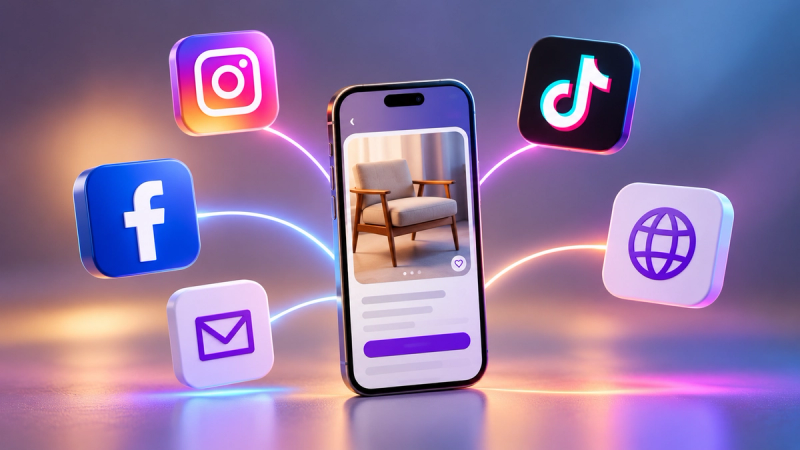
Discover how FLRPL complements your website, Facebook, Instagram, and TikTok by helping local shoppers find merchandise available in nearby retail stores.

Your Store. Your Merchandise. Your Digital Outlet.
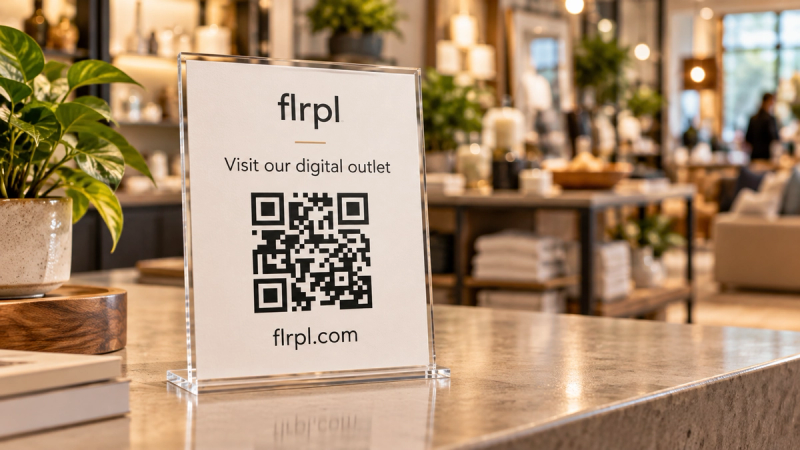
Give your store a digital outlet. See how FLRPL helps local retailers showcase products, share their branded storefront, and connect with nearby shoppers.
You Don't Need Everyone to See It
Local merchandise doesn't need everyone to see it. Explore why proximity, availability, timing, and relevance all matter in local retail discovery.
Discover What's Waiting Nearby
Browse inventory from verified local retailers near you.