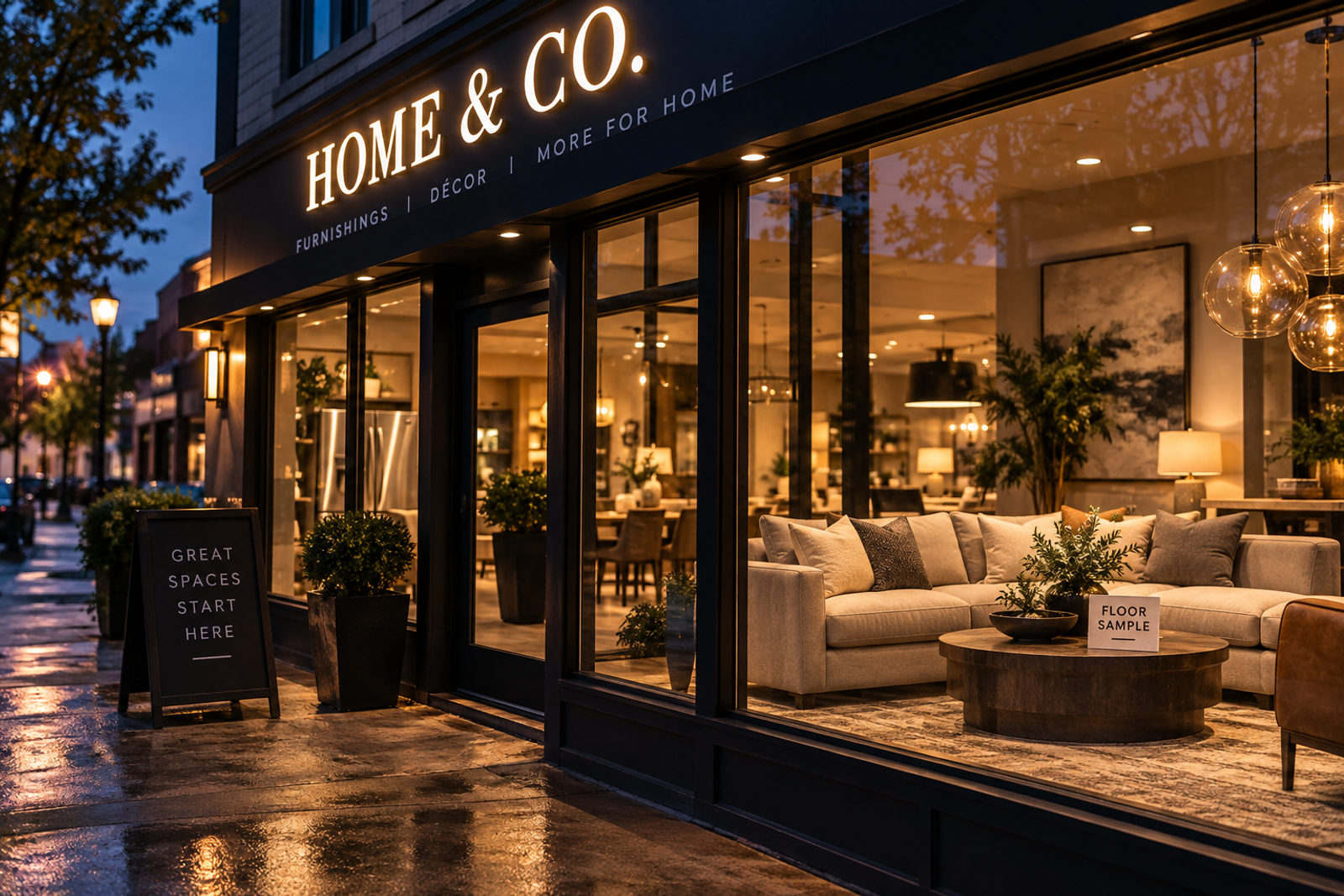
Your Storefront Starts Before the Front Door
Shoppers often research before visiting a store. See how product-level visibility can help local inventory become discoverable before they reach the front door.

FLRPL Editorial Team
Author
TL;DR
- For decades, a storefront sign was often a shopper's first real encounter with a business — and new research suggests that's still true. But it's no longer the only first encounter.
- Before many shopping trips, people already research online: checking availability, comparing prices, reviewing selection.
- A retailer can be visible as a business without every item inside the store being visible as inventory. Floor samples, open-box pieces, clearance goods, and one-of-a-kind finds often sit outside that visibility entirely.
- A new discovery sequence is becoming possible alongside the traditional one: shoppers may find a specific product first, then learn where it is, then decide whether to visit.
- The physical store isn't going anywhere. What's changing is how many ways a shopper can arrive at the decision to walk through the door.
The Sign That Still Speaks First
Ask any longtime retailer what their storefront sign is for, and the answer rarely takes long. It says the business is open. It says where to turn. It says, without a word of sales copy, we're here.
That function hasn't disappeared. A 2026 Harris Poll survey conducted on behalf of Signarama — 2,007 U.S. adults, fielded that July — found that signage still carries real weight in how people decide where to shop. Eighty-four percent said signage affects their decision to purchase from a business at all. Thirty-nine percent said they've walked into a store for no other reason than the sign caught their eye.
Those are not small numbers. They're a reminder that physical presence — a name in lights, a logo on a facade, a sign visible from the road — still does something that no app notification quite replicates. It builds a first impression before a single word is exchanged.
The same survey found that signage shapes more than attention. Ninety percent of respondents said signage affects whether a business appears professional or high-quality, and 82% said it affects how much they trust a business in the first place. A sign, in other words, was never just a locator. It was a credential — a quiet signal that the business behind it was established, legitimate, and worth walking into.
For a retailer carrying real, physical inventory, that credential still matters. It's part of why brick-and-mortar retail has never simply been about having a location; it's about having a presence that people recognize and trust before they know anything else about you.
But "first impression" is doing a lot of work in that sentence, and it's worth pausing on what it actually means today. A sign can only make a first impression on someone who is already standing, walking, or driving close enough to see it. That was a reasonable assumption for most of retail history, because proximity and discovery were basically the same event. You found the store by being near the store.
That assumption doesn't hold as tightly as it used to. And that's the real subject of this piece — not signage, but everything that now happens before a shopper gets close enough for the sign to do its job.
More of the Journey Happens Before the Door
The front door hasn't moved. The path to it has.
A useful way to think about the shift: the sign says we're here. A website says this is who we are. Neither one, on its own, answers the question a lot of shoppers are actually asking before they leave the house: is what I want actually there right now?
That question is being asked before many shopping trips. A shopper deciding whether to visit a furniture showroom, an appliance dealer, or a flooring store no longer has to guess what's inside. They can check, at least in principle, before they ever leave the house.
In a January 2026 survey of 3,004 U.S. consumers conducted by ICSC and McKinsey, 85% said they'd done some form of online research before a convenience-oriented store visit — checking product availability, comparing prices, reviewing what's in stock, or looking for a coupon. This wasn't a survey about people abandoning stores for online shopping. It was a survey about people using digital tools to decide whether — and where — a physical trip was worth making.
The same research points at why that matters to retailers specifically. Thirty-seven percent of respondents named reliably finding what they wanted among their top three reasons for choosing a particular retailer. Thirty-three percent cited convenient location. And nearly 94% agreed that a store fitting naturally into their daily routine would make them more likely to shop there. Put together, those numbers describe a fairly ordinary shopper: someone who values a store being close, and values knowing — ahead of time — that the trip will actually be worth it.
That's the piece worth sitting with. Proximity still matters, but being nearby doesn't necessarily mean a shopper knows what's inside. A store can be five minutes away and still be undiscovered, in a meaningful sense, if a shopper doesn't yet know what inventory is actually there.
This is a subtle but important shift from how retail discovery used to work. A shopper driving past a furniture showroom or an appliance store used to form their impression from the outside — the building, the sign, maybe a window display. Today, a meaningful share of that impression can form somewhere else entirely: a search result, a listing, a photo of one specific item, encountered long before the car ever turns down that street. The store hasn't lost its role in that process. It's simply no longer the only place the process can begin.
Two Kinds of Visibility
This is where it helps to separate two things that often get treated as the same thing: business visibility and inventory visibility.
A storefront sign makes the store visible. A website and a social presence help explain the business: what it sells, where it's located, what it's known for. Both are valuable, and most established retailers already have some version of each.
But neither one automatically makes every item currently sitting inside the building visible to someone outside it. A retailer can be well known in a neighborhood — trusted, remembered, easy to find — while a specific floor sample sitting in the back corner of the showroom remains, for all practical purposes, invisible to anyone who hasn't already walked in.
This gap shows up most clearly with inventory that doesn't fit neatly into a normal catalog:
- Floor samples, which are one physical unit, not a SKU with ongoing stock
- Open-box merchandise, priced and positioned differently than new inventory
- Clearance goods being moved for space, not marketed for margin
- Discontinued products no longer listed by the manufacturer
- Overstock that arrived in the wrong quantity or the wrong season
- One-of-a-kind pieces that exist exactly once
None of this inventory is hidden on purpose. It's simply sitting in a category that most digital tools weren't built to represent. A retailer's ecommerce catalog is usually built around ongoing, replenishable products. Floor samples and clearance pieces are the opposite — finite, specific, and often gone the moment they sell. That mismatch is one reason a genuinely available product can go unseen by someone who would have wanted it, and who was close enough to buy it.
Related reading: The Inventory Is Already There. The Audience Isn't.
A Second Possible Sequence
For most of retail history, discovery followed one basic sequence: find the store, walk in, discover what's inside. The store came first. The merchandise came second.
The research above suggests a second sequence is becoming possible alongside the first: discover a specific product, learn where it physically is, discover the retailer carrying it, then decide whether the trip is worth taking. The product comes first. The store follows.
This isn't a claim that shoppers now behave this way as a rule, or that the first sequence has been replaced. The traditional store-first path remains familiar: a shopper knows a retailer, visits the store, and discovers what's inside. But the survey data on pre-visit research — checking availability, comparing selection, confirming a product is in stock — describes exactly the kind of behavior that can also support a product-first sequence. People are already doing the research step. What's less consistent is whether the specific item they'd want to see actually shows up in that research.
That's a meaningful distinction from a website update or a stronger digital presence in general. Those efforts help a shopper who's already looking for the business. They do less for a shopper who's looking for a thing and doesn't yet know which business has it.
Consider two shoppers, both in the market for the same kind of purchase. The first already knows the retailer — maybe they've bought from them before, or a neighbor recommended the store — and their research is really about confirming a decision they've mostly already made. The second shopper has no retailer in mind at all. They're searching for a specific kind of item: a particular style of dining chair, a discontinued appliance model, a floor lamp in a finish that's hard to find. For that second shopper, the business-first sequence never really starts, because there's no business to start with yet. Whatever store happens to have the right item, visibly enough for that shopper to find it, effectively wins the introduction — regardless of how strong its sign or its brand recognition might be to someone else.
That second shopper represents another possible path to discovery: category first, specific need first, and the retailer's name filled in only once the right product turns up.
Related reading: Give Shoppers Another Way to Find You
The Store Still Does What Only a Store Can Do
None of this argues that digital discovery is replacing the physical visit. If anything, the research points the other direction. In ICSC's 2026 Cost of Convenience research, 63% of respondents said immediate access to a product — being able to take it home the same day — is something they specifically value about shopping in person. Fifty percent cited the value of simply browsing and discovering things they weren't looking for.
Those findings point to experiences the physical store is uniquely positioned to provide. Trying a chair before buying it. Seeing a finish in daylight instead of a photo. Talking to someone on the floor who actually knows the product. Walking out with the item instead of waiting for a truck. A store remains the place where inspection, comparison, conversation, and possession actually happen — and for large, physical, or one-of-a-kind goods, that in-person moment is often the whole reason the purchase happens at all.
What's changing isn't the value of the visit. It's the number of ways a shopper might arrive at the decision to make one. Digital discovery, at its most useful, doesn't try to replace that moment — it helps a shopper decide whether the trip is worth taking in the first place.
When the Product Introduces the Store
This is the part of the shift that matters most for retailers carrying physical, often one-off inventory.
If a shopper can encounter a specific product before they encounter the store carrying it, then the product itself becomes a kind of introduction. Not a replacement for the storefront, the website, or the staff — an additional entry point that runs alongside them.
This is the idea FLRPL is built around. FLRPL is a local retail discovery platform for verified brick-and-mortar retailers. It helps retailers make selected physical inventory — floor samples, open-box merchandise, clearance goods, overstock, discontinued products, one-of-a-kind pieces — digitally discoverable to nearby shoppers. Individual listings on FLRPL are called Drops.
A Drop is meant to function as a kind of digital window into something that physically exists inside a local store. The product itself stays exactly what it is: one physical item, sitting on a showroom floor, waiting to be picked up in person. The store remains the retailer. The shopper still decides, entirely on their own, whether the trip is worth making.
What a Drop is designed to change is simpler: it gives that specific item another possible way to be encountered — by someone nearby who happens to be looking for exactly that kind of piece, at exactly the moment it's available. For a shopper who's never heard of the store, that one item can become the first thing they know about it. Not the sign. Not the website. The product itself.
Think about the categories where this kind of inventory is common: furniture showrooms with floor models that rotate seasonally, appliance dealers with open-box units taken off a delivery truck, lighting and kitchen-and-bath retailers with discontinued lines from a manufacturer refresh, outdoor and sporting goods stores with last season's inventory taking up rack space. In every one of these categories, the item in question is real, priced, and sitting in the building right now — but it may be too specific, too temporary, and too singular to fit neatly into a retailer's broader marketing. A Drop is built for exactly that kind of item: singular, time-bound, and physically real, rather than an evergreen product meant to be restocked and remarketed indefinitely.
That distinction matters because it changes what "marketing" means for this slice of inventory. A retailer doesn't necessarily need to put a discontinued lamp in front of a broad audience. The opportunity is to make it discoverable to nearby shoppers who may already be looking for something like it. That's a narrower, more specific kind of visibility than a general brand campaign — and it's particularly relevant for inventory like floor samples and clearance goods.
The opportunity is straightforward: selected inventory already sitting inside a local store can have another path to discovery. The merchandise doesn't change. The retailer doesn't change. What changes is the opportunity for a nearby shopper to encounter that product before ever walking through the front door.
Related reading: The Showroom Can Be Discovered Before the Visit
The Assets Were Already There
None of this requires retailers to rebuild anything they've already built. Most independent retailers carrying physical inventory already have the assets that matter most: a real storefront, a trusted local reputation, staff who know the merchandise, and — often overlooked — inventory that's already sitting there but may have limited visibility beyond the people who walk through the building.
The sign still tells people the business is here. The website still explains who the business is. What's been missing, for a specific and often valuable slice of inventory, is a way to say: this is what you can find here right now.
The Opportunity
Every day, independent retailers already have inventory waiting to be discovered.
Floor samples.
Open-box merchandise.
Clearance inventory.
Overstock.
Discontinued products.
One-of-a-kind finds.
Inventory already sitting on showroom floors.
That's why FLRPL exists.
FLRPL helps verified local retailers create visibility for inventory they already have, making it easier for nearby shoppers to discover what's available before they ever visit the store.
FLRPL.
Your Digital Outlet for Local Inventory.
Visibility creates discovery.
Related Articles

Getting Your Home Ready for the Holidays? Start Here.
Preparing your home for holiday guests? Explore smart tips for furniture, guest rooms, appliances, delivery planning, and finding merchandise at local stores.

Different Channels. Different Jobs.
Discover how FLRPL complements your website, Facebook, Instagram, and TikTok by helping local shoppers find merchandise available in nearby retail stores.
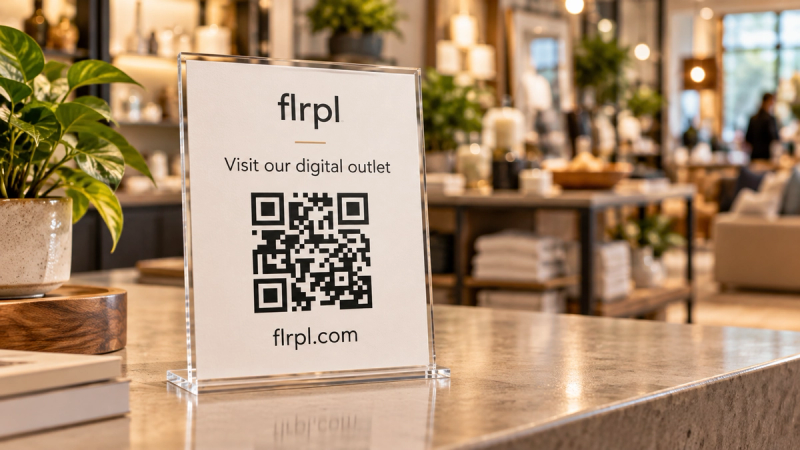
Your Store. Your Merchandise. Your Digital Outlet.
Give your store a digital outlet. See how FLRPL helps local retailers showcase products, share their branded storefront, and connect with nearby shoppers.
Discover What's Waiting Nearby
Browse inventory from verified local retailers near you.